On this page
- Who the buyer was, and why that changed the conversation
- Ten days, four shortlisted suppliers
- The scorecard they used - and the weights that decided it
- Why most candidates were eliminated before the meeting
- What changed on the factory floor
- What they ordered first - and why the shape of the first order matters
- The transferable checklist
- Frequently asked questions
This is the story of a decision rather than a transaction. It is worth reading if you are planning your own sourcing trip, because the questions this buyer asked — and the order in which they asked them — are the same questions that separate a manufacturer from a middleman. We have reproduced the trip structure, the audit criteria and the weighted scorecard they used, so another buyer can run the same process without the ten days of travel.
What this case gives you
- The ten-day trip structure, day by day, including how candidates were filtered before travelling.
- The six weighted criteria this buyer scored, and how the weighting changes the outcome.
- What disqualified candidates — and the tell that identifies a reseller quickly.
- The first order shape: why they led with breadth of models instead of size of a single platform.
- A one-page checklist any buyer can reuse on a supplier visit.
01Who the buyer was, and why that changed the conversation
The client runs a family-owned transmission repair and parts business in Mexico with four professional repair chain stores covering automatic transmission service, parts sales and complete-assembly supply. They have been in this vertical for years. That matters because an experienced buyer does not need to be taught what a quality standard looks like — they set the bar for professionalism, production capacity and quality management themselves, and then check whether a supplier clears it.
The composition of the sourcing team was the second factor. Two of the five were senior technical engineers. When an engineer is in the room, the conversation on both sides shifts from price to process: which parts are replaced, how clearances are measured, what is tested and what is recorded. A commercial-only delegation asks about margin; a technical delegation asks about the pan side of the last unit that failed, and expects a specific answer.
02Ten days, four shortlisted suppliers
The trip was not a tour of everything that could be found online. Candidates were screened remotely first, and only four were visited in person. The schedule below is the structure they ran.
| Days | Activity | What it produced |
|---|---|---|
| 1–2 | Remote screening: catalogue requests, video calls, specification questions, cross-checking of claimed model coverage | A shortlist of suppliers worth a visit instead of a long list of addresses |
| 3–4 | First plant visit: line walkthrough, warehouse, dispatch area, packing station | Structural elimination — resellers became obvious within an hour |
| 5–6 | Second and third visits: technical deep dive on two platforms the buyer repairs most, test-bench demonstration requested | Comparison of process depth on the same platforms, side by side |
| 7–8 | Fourth visit: full production walk, testing centre, finished-goods warehouse, technical meeting on quality control and after-sales | The scorecard reached a decision point |
| 9 | Commercial and logistics session: MOQ, mixed pallet composition, packing standard, documents, warranty terms | Terms in writing, including a 12-month warranty confirmation |
| 10 | Final meeting, order placed on site | 200+ product order: 80+ assembly models and 80+ spare-part types |
03The scorecard they used — and the weights that decided it
What separated this buyer from most is that the criteria were written down and weighted before travelling. Price was one criterion out of six, and not the heaviest. The chart below shows the criteria and the score the successful supplier had to reach to close the visit with an order.
Why the weighting matters more than the scores
Two buyers can score the same four suppliers and reach opposite conclusions, because the difference is in the weights. A distributor selling into a market where warranty claims are expensive and freight is slow will weight test evidence and traceability heavily. A trader filling a one-off container for an end customer may weight unit price and lead time instead. Neither is wrong — but only one of them produces a supplier relationship that survives three years. This buyer weighted durability of supply, which is what a four-store chain actually needs.
04Why most candidates were eliminated before the meeting
Over the ten days the team evaluated a long list and found the same pattern repeatedly: most candidates were trading intermediaries with no independent production or quality-control capability. For a buyer running four stores that is the wrong risk profile entirely — no control over quality stability, no reliable delivery commitment, and no after-sales backup when a unit behaves badly in a customer's car.
| Observation | What it usually means |
|---|---|
| Can quote any model number instantly, including niche platforms | Reads from a trading list rather than from stock they control |
| Cannot describe the same unit through inspection, assembly, testing and warehousing | Does not run those stages — the unit passes through other hands |
| No test evidence available for a specific unit, only general statements about quality | Testing is performed by the entity they buy from, if at all |
| Avoids a video walkthrough of packing and dispatch | The packing standard is not theirs to show |
| Vague or unofficial warranty language | Warranty decisions depend on their upstream supplier's goodwill |
| Site visit deferred repeatedly with scheduling reasons | There is no site of the kind a buyer expects to see |
A reseller can name any model number you ask for, because they buy it from someone else. What they cannot do is walk you through that same unit through inspection, assembly, testing and warehousing — with the unit in front of you and its test record in hand.
05What changed on the factory floor
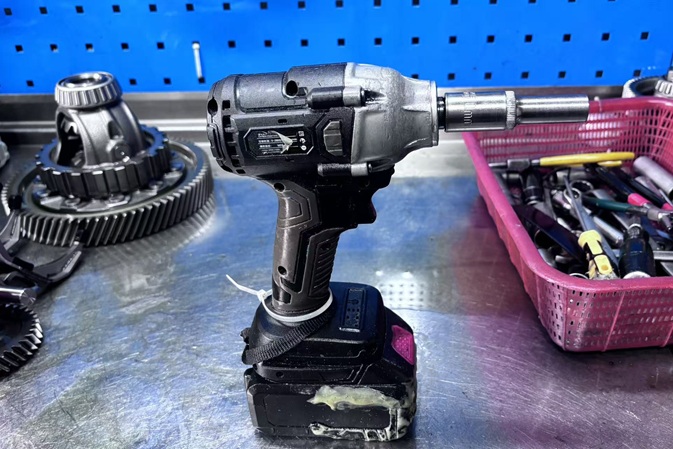
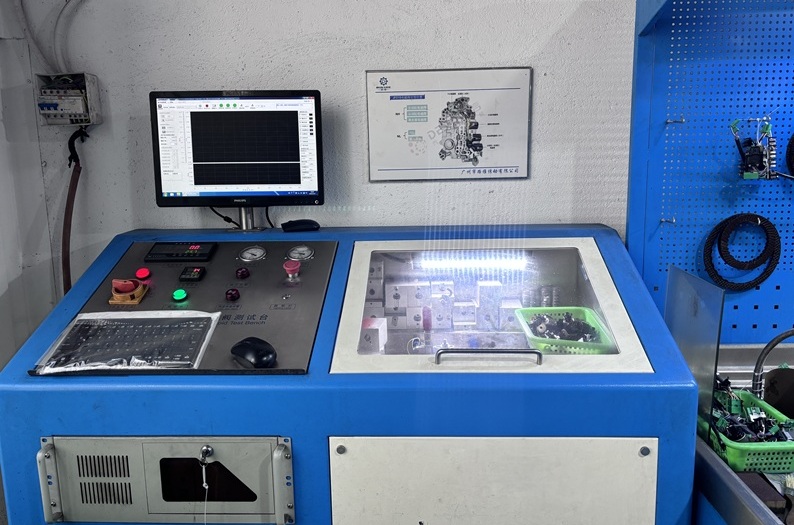
The specific concerns the buyer arrived with disappeared on the first walkthrough, and the reason is process rather than equipment. As an original manufacturer we run a standardised production system for transmission repair and remanufacturing, controlling every procedure in-house: component inspection, precision assembly, performance testing and finished-goods warehousing. Each stage runs on standardised, traceable and verifiable specifications, which is what turns product quality into something a supplier can stand behind rather than merely describe.
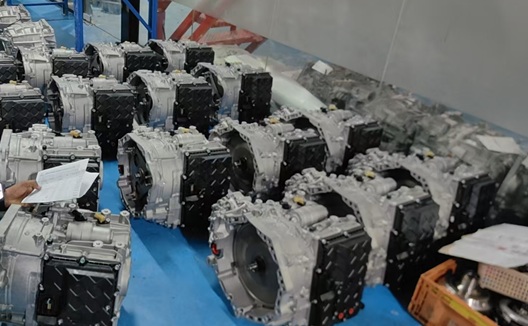
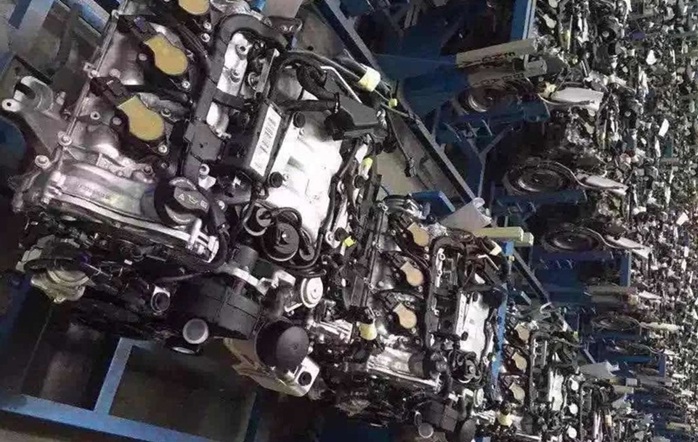
The team also toured the production park and the finished-goods warehouse, where stock of over 10,000 units is held across new, remanufactured and second-hand transmissions. For a distributor, breadth of model coverage plus real stock depth answers the two questions that determine whether a supplier can support a market consistently: can you cover the models my customers bring me, and can you do it repeatedly? Those are operating questions, and they are the ones a warehouse answers before any sales meeting starts.
The stock-depth question, answered in numbers
Stock depth is measurable, and most buyers underestimate how much it varies between suppliers. The relevant figures for a buyer auditing coverage are the ones published on this site: 48 complete-assembly model families and 214 catalogued part numbers across 13 categories, from valve bodies and solenoids through control units, pulley sets, overhaul kits and hard parts. The full list is published as a machine-readable A–Z index, so a distributor can check coverage against their own market's vehicle mix before travelling. The categories are laid out on the products overview, with assembly families in transmission assemblies and the platform view in the model center.
06What they ordered first — and why the shape of the first order matters
The order placed on the day of the visit was not a container of one popular platform. It was 200+ products: 80+ assembly models plus 80+ spare-part types. That shape is deliberate and it is worth copying. A first order built around a single platform maximises unit economics on paper, but it leaves a distributor unable to answer the next customer who walks in with something else. Spreading the first order across models and across component levels builds a local position that generates repeat demand, which is precisely what then justifies depth on the top sellers.
The second feature of the order was the mix between assemblies and components. Roughly half the line items were components — the valve bodies, kits, friction and hard parts that turn a transmission workshop from a fitter of assemblies into a repairer. Component revenue is smaller per invoice and far stickier, because it brings the workshop back every time a unit needs diagnosing rather than replacing. That logic is documented in valve body failure symptoms, where the level of repair selected decides the profitability of the job.
07The transferable checklist
Below is the trip distilled into something any buyer can run, whether travelling or auditing remotely by video.
- Screen remotely, travel selectively. Ask for the code, the catalog and a video walkthrough of packing before booking flights. Most candidates eliminate themselves at this stage, which saves the entire trip budget for the few that matter.
- Send your own technician list. Arrive with the platforms you actually repair and ask to see those units on the bench. Generic quality language does not survive a specific request.
- Request test evidence for a specific unit. Not a certificate on the wall — the record for the unit you are being shown.
- Walk the warehouse, not just the showroom. Stock depth and shelf labelling tell you whether model coverage is real or a brochure claim.
- Watch packing and dispatch. Damage in transit is a supplier's problem only if the supplier packed it properly; check what that actually looks like.
- Get warranty in writing before negotiating price. Term, scope, exclusions and who pays freight on a replacement.
- Order breadth first, depth second. Cover the vehicles your market brings you, then deepen the top sellers once demand is proven.
The same process applied remotely is covered in why buyers fly in before they order, which documents what 50+ visiting groups verified across a year.
08Frequently asked questions
How long does a supplier sourcing trip like this take?
This team allocated ten days and visited four shortlisted suppliers, which is a realistic structure: one or two days of remote screening, then three to four days of plant visits with technical sessions, then commercial and logistics meetings before placing the order. Buyers who try to cover more than five suppliers in a week spend the time travelling instead of auditing.
What should I check first when auditing a transmission supplier?
Test capability and stock depth, in that order, because neither can be faked on a price list and both determine whether the supplier can support you after the sale. Ask for a specific unit's test record and walk the warehouse yourself. Catalogue claims and quality adjectives are cheap; a dyno result and shelf labelling are not.
How do I tell a manufacturer from a trading company?
Ask them to walk the same unit through inspection, assembly, testing and warehousing, with the unit in front of you. A manufacturer can do it without preparation; a reseller cannot, because the unit passes through other hands. A second signal is whether they can produce test evidence for a specific unit rather than a general certificate.
Is it worth visiting a factory for a first order?
For a distributor building a long-term position, yes — the audit answers questions that no catalogue can. For an initial trial order, a remote audit plus a one-piece sample order is a reasonable substitute: the sample tests fitment, documentation and packing, and the visit can follow once those are proven.
What order size is realistic to start with?
This buyer placed a 200+ product order on the day of the visit — 80+ assembly models plus 80+ spare-part types — because four stores demanded breadth immediately. Smaller importers typically start with a mixed pallet of components and one or two platform families. Minimum order is one piece, and quotation, availability and lead time are confirmed per inquiry.
How is quality verified after the visit ends?
Through traceability: an identification tag, a photograph and a test record per unit, so the unit arriving at the dock can be matched to what was approved. Where a technical problem appears after the sale, our engineering team provides remote guidance for fault identification and repair routing, because a distributor's local reputation is what absorbs a warranty issue.
Most buyers start with a one-piece order and a video walkthrough of the exact unit before it ships, then visit once the sample has proven fitment, documentation and packing. Send your platform list and we will build the agenda — in person or on camera.

Written by the TRANSMESUN Engineering Team
Guangzhou Meishun Automatic Transmission Co., Ltd. rebuilds, tests and exports automatic transmission assemblies and components from a CE-certified plant in Huadu, Guangzhou — 10 production lines, 2,000 m², 20 test benches and 100% full-load dyno testing on complete units.