On this page
- Three options that are not three versions of the same thing
- What "remanufactured" should mean - and what it often does not
- What each route really costs over three years
- How to choose, vehicle by vehicle
- Warranty and risk, compared honestly
- The verification data behind our remanufactured units
- Frequently asked questions
This comparison is not about which product is "best". It is about which product matches the vehicle, the customer and the risk that workshop is willing to carry. Those three variables decide the answer far more often than the purchase price does — and the buyers we work with who make the most money on transmission work are the ones who decide deliberately at the quotation stage instead of after a comeback.
What this guide gives you
- What actually distinguishes the three options — not the labels, but the wear parts and test depth behind them.
- A three-year cost model that puts purchase, labour, failure risk and rework on one line.
- A decision flow to work through per vehicle, per customer.
- How warranty terms differ in practice, and which questions expose a weak warranty.
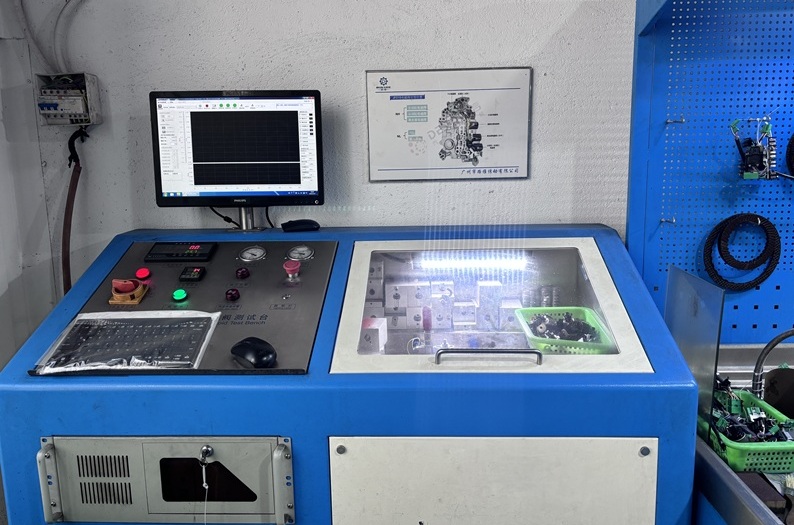
- The verification data from our own line: 20 test benches, 100 % dyno testing on assemblies, 12-month written cover.
01Three options that are not three versions of the same thing
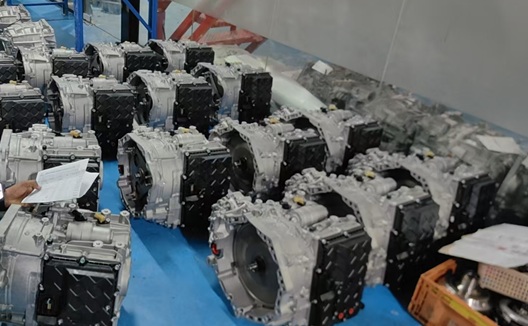
The three products are produced by three different processes, and that is the honest starting point. A new unit is manufactured to the original specification. A remanufactured unit is a used core that has been fully disassembled, measured, rebuilt with replacement wear parts and tested. A used unit is a core that has been cleaned, and sometimes not even that. Two of those processes involve inspection; one does not.
| Attribute | New OEM | Remanufactured | Used / salvage |
|---|---|---|---|
| Wear parts | New by definition | Clutches, seals, bushings, solenoids and known wear items replaced | Whatever life is left in them — unknown |
| Documented design updates | Included if the part number was superseded | Updated where a superseded part exists and applies | Only if the original car had already been updated |
| Testing | Production test at the plant | Bench and dyno test with a recorded result | Typically none |
| Traceability | Part number and batch | Identification tag, photograph and test record | Often unknown origin and mileage |
| Warranty | Manufacturer terms | Written, typically 12 months in this trade | Usually none, or 30 days goodwill at best |
| Purchase price | Highest | Middle | Lowest |
| Real risk of return | Lowest | Low when the process includes bore and pressure testing | Highest — and unknowable before installation |
02What "remanufactured" should mean — and what it often does not
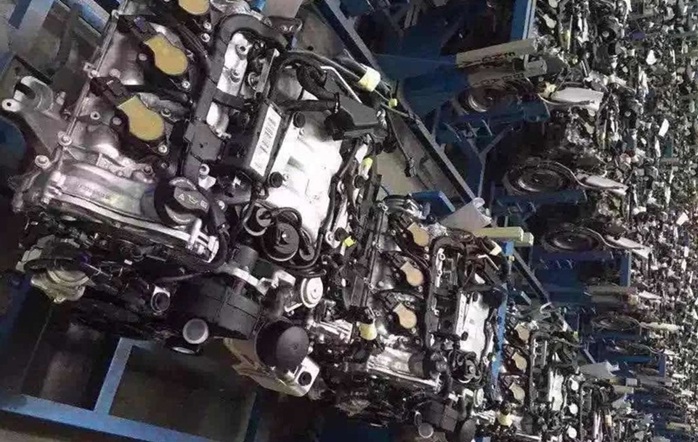
There is no global standard that makes the word "remanufactured" mean anything specific, which is why the same word describes a fully measured rebuild and a cleaned core with fresh paint. The difference between those two is entirely captured by one question: which wear parts were replaced, and what testing was performed before boxing? A supplier who cannot answer that in writing has told you the answer.
The wear parts that decide whether a rebuild lasts
- Friction elements. Clutch plates and steel plates are the parts that carry torque. A rebuild that reuses friction material, regardless of how clean the unit looks, has a defined and short life ahead of it.
- Seals, O-rings and gaskets. Inexpensive individually, decisive collectively. A hardened lip seal produces a pressure loss that mimics a valve body fault and sends the vehicle back into the workshop.
- Bushings and bearings. The wear points that determine whether the unit still has correct internal clearances, and the ones most often skipped because they require measurement rather than cleaning.
- Hydraulic and electronic controls. Solenoids, valve body wear surfaces and, where relevant, the control unit itself. These are where generation-specific revisions matter most.
- Superseded parts. Where the manufacturer published an updated component to address a known failure, a rebuild that installs the updated part lasts longer than the original design did. This is where a good remanufacturer can outperform a like-for-like repair.
"Which part numbers do you replace as standard, and can I see the test result for my unit before it ships?" A supplier with a real process answers both immediately. A supplier whose process is cleaning and inspection will answer neither, or will answer with adjectives.
03What each route really costs over three years
Purchase price is the smallest number that matters. The model below puts the three routes on one line using indexed values — purchase cost, labour, and the expected cost of failures and rework across a three-year, 100,000 km service window. Index 100 is the new-unit purchase cost, so the chart compares shapes rather than quoting anyone's actual prices.
| Component | How it is treated | Practical meaning |
|---|---|---|
| Purchase | New = 100. Reman indexed at the observed trade ratio; used indexed at the observed salvage ratio | One-off cash out of the door at the start of the job |
| Labour | R&R labour applied to every route, plus the second labour event charged where a unit fails inside the window | Labour is the cost that owners forget when comparing parts prices |
| Failure & rework | Probability-weighted from each route's failure profile, including fluid, consumables and customer-handling time | The segment that separates the routes by year three |
| Window | 36 months / 100,000 km, mixed urban and highway duty | Long enough to expose wear, short enough to be realistic |
| Not included | Downtime cost and brand damage — real, but specific to each workshop | Add these and the spread widens further |
Basis: this is an illustrative model with stated assumptions, not a quotation and not a statistical survey. Its purpose is to show the direction and shape of the trade-off. Where we have verified platform or part data, we publish it; where the answer depends on the specific vehicle, we say so and confirm in writing. We do not publish prices on this site — availability, fitment and lead time are confirmed per inquiry.
04How to choose, vehicle by vehicle
The same workshop genuinely should answer the question differently for different cars on the same day. The flow below is the order of questions that resolves it, from the most decisive to the least.
05Warranty and risk, compared honestly
Warranty language differs in ways that only appear when a claim happens. Four questions separate a real warranty from a reassuring sentence: does it cover the part only, or the labour as well? Is the term stated in writing on the invoice? What voids it — fitting errors, contaminated fluid, unauthorised modifications? And who pays the freight on a replacement unit?
| Risk | New OEM | Remanufactured | Used |
|---|---|---|---|
| Fitment risk | Low, if the code is right | Low — confirmed against the application list | High — often sold without a code check |
| Early-life failure | Lowest | Low when friction, seals and bushings are replaced | Unknown, and not capable of being known |
| Comeback cost to the workshop | Manufacturer process, slow but covered | Replacement part plus clear claim route | Carried entirely by the workshop |
| Customer relationship risk | Lowest | Low | Highest — the workshop absorbs the story |
| Honest use case | Under warranty, or a platform with no proven reman route | High-mileage repair, fleet service, resale preparation | Short-term resale or end-of-life vehicles, sold with eyes open |
06The verification data behind our remanufactured units
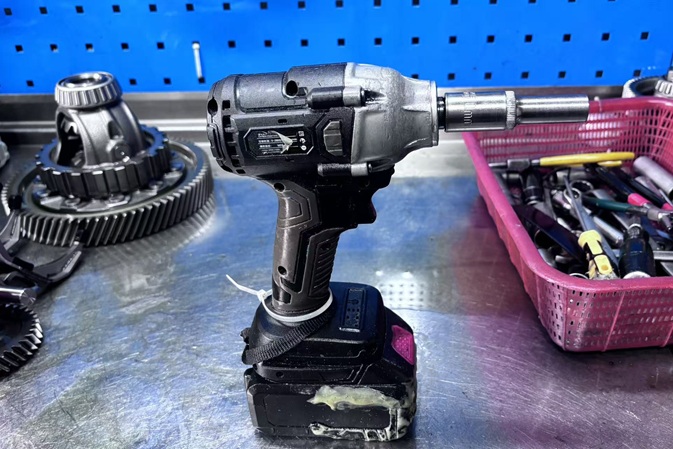
Since the argument above rests on process, here is what our process actually consists of. These are the plant figures we publish for buyers auditing us, and the same numbers are documented on our factory and quality-control page.
Two of those figures deserve a sentence each. The 100 % dyno testing is what makes a warranty affordable: units are not boxed on the assumption that the rebuild was correct, they are boxed after the rebuild has been demonstrated. The repeat-order share is the figure we watch most closely, because in this trade a reordering buyer is the only evidence that a unit lasted that a supplier can publish at all.
Assemblies are listed by model family in the transmission assemblies section, with overhaul kits in overhaul kits, friction in clutch kits and friction, and hydraulics in valve bodies and mechatronics. Model coverage by platform is collected in the model center.
07Frequently asked questions
Is a remanufactured transmission as good as a new one?
For most platforms in the aftermarket, a properly remanufactured unit performs to specification and carries a written warranty, at a materially lower landed cost. What decides the comparison is the process: friction elements, seals, bushings and known wear parts replaced, superseded components applied, and the finished unit tested under load. Cleaning and inspection alone do not produce an equivalent product, however good the unit looks.
Is a used transmission ever the right choice?
Yes, in narrow cases: a short-term resale, an end-of-life vehicle, or a customer who has explicitly accepted the risk. What should never happen is a used unit being sold at a price that makes it look equivalent to a rebuilt one, or being fitted without the housing-code check. Used units have unknown wear and usually no meaningful warranty, so the workshop carries the entire comeback risk.
What should a remanufactured transmission include?
Full disassembly and deep cleaning; measurement and rejection of worn or damaged hard parts; replacement of friction, seals, gaskets, bushings and known wear items; application of documented superseded parts where they exist; reassembly with correct clearances; and a bench or dyno test with a recorded result. If any of those steps is missing, the unit is not remanufactured in any meaningful sense.
Why is labour often more important than the parts price?
Because a transmission repair is dominated by remove-and-refit labour, and a failure inside the warranty window usually means paying that labour twice, plus fluid and consumables. In a three-year view, the difference between routes is driven by the failure-and-rework segment rather than by the purchase line, which is why the cheapest unit frequently produces the most expensive job.
What voids a transmission warranty in practice?
Fitting errors, contaminated or incorrect fluid, a cooler that was not flushed after a previous failure, reusing a failed converter with a new assembly, and unauthorised internal modification. Ask for the terms in writing before you buy — a warranty whose exclusions are only explained after a claim is not a warranty you can plan around.
Do you supply mixed containers with several platforms?
Yes. Complete assemblies are catalogued as 48 model families, with component categories carried in parallel, so a single order can combine assemblies, valve bodies, kits and hard parts across platforms. Minimum order is one piece, and quotation, availability and lead time are confirmed per inquiry rather than published as a fixed price list.
Send the transmission code, the vehicle's use case and your market. Our engineers reply with the realistic options for that platform, what wears on it, which parts have been superseded, and the lead time on each route.

Written by the TRANSMESUN Engineering Team
Guangzhou Meishun Automatic Transmission Co., Ltd. rebuilds, tests and exports automatic transmission assemblies and components from a CE-certified plant in Huadu, Guangzhou — 10 production lines, 2,000 m², 20 test benches and 100% full-load dyno testing on complete units.