On this page
- What a valve body actually does - and the three ways it fails
- Symptom-to-cause map: what the driver is actually describing
- The codes worth acting on
- A diagnostic decision flow you can run on the bench
- What a remanufactured valve body has to pass
- What to order: solenoid kit, valve body, or assembly
- Frequently asked questions
Nobody buys a valve body because they want one. They buy it because a customer described a symptom, a scanner produced a code, and a decision had to be made quickly. The expensive mistakes cluster in exactly that gap — a solenoid replaced when the bore is worn, a valve body replaced when the converter clutch is the culprit, or a complete assembly sold when a bench-tested reman valve body would have solved it for a fraction of the cost.
What this guide gives you
- A symptom-to-cause-to-part table covering the complaints that walk in most often.
- The diagnostic decision flow we run on the bench, in order of cost.
- A check-to-check table of what a remanufactured valve body must pass before it is boxed.
- How to decide between a solenoid kit, a valve body and a complete assembly — with the catalog coverage data behind each option.
- A six-question FAQ answering the fitment and warranty points buyers ask most.
01What a valve body actually does — and the three ways it fails
The valve body is the hydraulic computer of an automatic transmission. Solenoids convert electrical commands from the transmission control unit into hydraulic pressure; spool valves inside the body direct that pressure to the clutches and bands that decide which gear is engaged. When the pressures arrive slightly late, slightly low or slightly early, the result is felt immediately through the driveline.
Failures are not random. In our intake data and in the documented service history of the platforms we handle, valve body complaints resolve into three mechanisms:
- Bore and spool wear. The classic. Aluminium bores wear oval over hundreds of thousands of cycles, pressure leaks past the spool, and the clutch engagement loses its authority. Symptoms build gradually over months, which is why drivers tolerate them until they become a shift flare.
- Solenoid performance drift. Resistance rises and response time lengthens before any code sets. The transmission still "works", but adapts constantly and eventually runs out of adaptation range — then a fault code finally appears and the workshop is told the box has failed.
- Contamination and blocked circuits. Friction material, degraded fluid and debris lodge in the small feed orifices. This often follows a clutch failure, which means a replacement valve body fitted to a contaminated circuit will fail again quickly. Clean and flush, then replace.
The fourth mechanism people forget
Torque-converter clutch and internal seal problems mimic valve body faults precisely, and they are the most common misdiagnosis we see in claims. Shudder at lock-up, a flare on light throttle and a hot-idle slip can all originate outside the valve body. That is why the diagnostic flow later in this guide rules out the converter and the seals before it recommends a valve body — even though recommending a valve body would be the more profitable answer.
02Symptom-to-cause map: what the driver is actually describing
Use this table in the service drive. The left column is what the customer says, not a technical description — translating between the two is half the diagnosis.
| What the driver reports | Typical root cause | First check | Usual part |
|---|---|---|---|
| Harsh engagement from park or neutral, especially when cold | Pressure too high: pressure-regulator bore sticking, or a solenoid stuck at high duty | Line pressure at idle versus specification; pan condition | Valve body, or solenoid kit if the body tests clean |
| Shift flare — engine revs rise between gears | Bore wear on the clutch feed circuit; a leaking apply piston seal can imitate it | Pressure trace during the shift; adapt values at the limit | Valve body; seal kit if pressures are correct |
| Delay into drive or reverse when cold, improving when hot | Seal hardening, or a filter and fluid circuit restricted by debris | Fluid level and condition; filter and pan debris | Overhaul or valve body depending on debris type |
| Shudder at 40–80 km/h under light throttle | Torque converter clutch material or its control circuit | Whether shudder disappears with lock-up commanded off | Converter, or valve body if control is the cause |
| Hunting between two gears at steady speed | Pressure or solenoid response drift, or an adaptation table at its limit | Live data: commanded versus actual line pressure | Solenoid kit first; valve body if bores are worn |
| Limp mode with a pressure or ratio code | Any of the above at a severity that triggered protection | Codes, freeze-frame data, then pressure | Determined by the flow, not by the code alone |
| No reverse, or reverse only when cold | Reverse circuit bore wear or a broken apply component | Reverse pressure and the mechanical state of the clutch | Valve body or assembly depending on the mechanical finding |
| Noise plus slip on a CVT platform | Pulley and belt wear combined with valve body pressure loss | Pulley face condition and belt inspection | Pulley set and valve body — judge both together |
How to use it: treat the fourth column as the most likely outcome, not a conclusion. Two of the eight rows can legitimately resolve to a converter or a mechanical fault, and ordering on symptom alone is how repeat claims begin.
03The codes worth acting on
Codes narrow the search — they do not identify the failed component. The table below lists the codes that appear most often alongside valve body work on the platforms we handle, and what each one does and does not tell you.
| Code | Meaning in practice | What it does not tell you |
|---|---|---|
| P0776 / P0777 | Pressure control solenoid B performance or stuck-off | Whether the solenoid or the bore it feeds is at fault |
| P0868 | Transmission fluid pressure low | Where the pressure is being lost: pump, bore, seal or filter |
| P0741 / P0742 | Torque converter clutch stuck off or on | Whether the cause sits in the converter or in its control circuit |
| P0715 / P0717 | Input speed sensor circuit | Whether the signal loss is electrical or mechanical (a worn drum) |
| P0730 and ratio codes | Incorrect gear ratio detected | Whether slip comes from the clutch, the pulley or the pressure supply |
| P0700 series (generic) | Request for MIL from the transmission controller | Almost nothing on its own — read the manufacturer-specific codes beneath it |
A code is evidence that the controller observed an outcome outside its expected window. It is not a parts catalogue and it is not a diagnosis. When a workshop orders from the code alone, the return rate climbs — and in our experience the fastest route to a first-time-fix is ten minutes of live pressure data.
04A diagnostic decision flow you can run on the bench
The flow below is the order we work in, and the order we recommend to buyers. It intentionally places the cheapest and most reversible checks first: solenoid resistance and control-unit output before disassembly, fluid and pan inspection before pressure testing, and pressure testing before anything is ordered.
05What a remanufactured valve body has to pass
Buyers ask what "remanufactured" means in practice. The honest answer is that it is defined entirely by the checks performed, and those checks differ enormously between suppliers. Below is the check sequence used on our line. Every unit passes all of it, which is also why our valve bodies carry a written 12-month warranty rather than a verbal goodwill promise.
| Stage | What is done | What it rules out |
|---|---|---|
| 1. Identification | Code read from the core, mapped to a catalog SKU and application list | Wrong-generation units entering the line at all |
| 2. Full disassembly and cleaning | Every spool, spring and plug removed; ultrasonic deep cleaning of the body and every circuit | Debris being carried over into a rebuilt unit |
| 3. Body and bore inspection | Bores and mating faces inspected; worn or damaged bodies are rejected rather than reamed | Pressure loss reappearing within months of fitting |
| 4. Wear-part replacement | Solenoids, seals, gaskets, screens and known wear bushings replaced as standard, not on request | The most common cause of short-life "rebuilt" units |
| 5. Assembly and valve operation check | Every spool checked for free travel and correct seating before the body is closed | Sticking valves that only reveal themselves when hot |
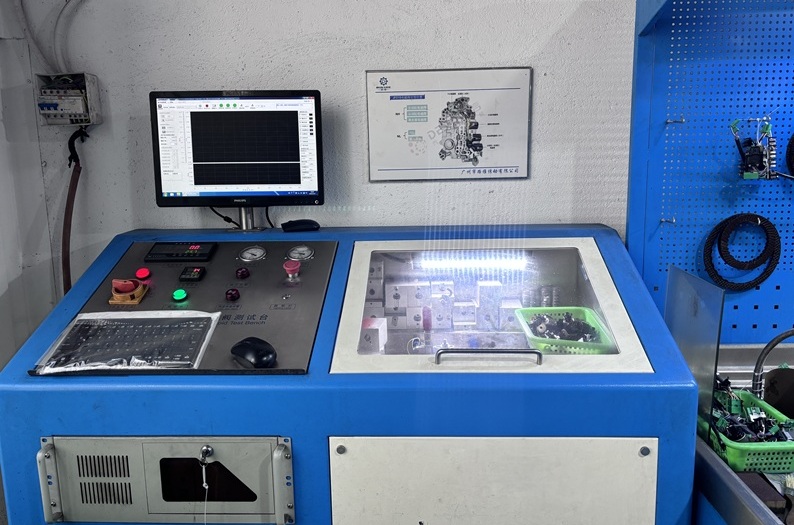
| 6. Bench pressure and function test | Unit run on the bench with pressure verified against the platform's specification across the working range | Passing a unit that shifts correctly on the bench and fails in the car |
| 7. Tagging and documentation | Unit tagged, photographed and recorded against its test result | Arguments about what was shipped and what was tested |
Why bench testing beats visual inspection
An experienced technician can spot a scored bore under a light. Nobody can see a solenoid that responds in the right window at 20 °C and drifts outside it at 90 °C, and that is the failure mode that generates most of the comebacks on remanufactured hydraulics. Bench testing under temperature and pressure is the only check that catches it before the unit is in a vehicle. That is the entire reason a properly remanufactured valve body is more than a cleaned used one — and why the two are not comparable at the same price.
06What to order: solenoid kit, valve body, or assembly
Once the fault category is known, the choice usually follows a simple cost ladder. We publish the coverage of all three levels in the catalog, so a buyer can see what exists before asking: valve bodies, solenoid kits and control units are each carried as a 16-SKU core range, alongside sensors and wiring at the same depth and a separate range of test and rebuild equipment.
| Evidence | Order | Rationale |
|---|---|---|
| Clean fluid, correct pressures, one solenoid outside specification | Solenoid kit | Cheapest level that removes the actual fault; body is sound |
| Bores worn, pressures low across several circuits, debris present but no friction material | Valve body | Bore wear cannot be corrected by replacing solenoids |
| Clutch material in the pan, ratio codes, mechanical slip under load | Assembly or overhaul | The friction and mechanical elements are already damaged |
| Communication loss with the controller, no pressure command at all | TCU / TCM | Electrical fault upstream of the hydraulics |
| Shudder that disappears when lock-up is disabled | Converter | The valve body is controlling correctly; the clutch material is not |
Ordering at the right level is what keeps a repair profitable. The relevant catalog pages are valve bodies and mechatronics, solenoid kits and TCU and TCM control units. Where the fault has already reached the friction elements, the alternatives are covered in new vs remanufactured vs used, and identification of the exact generation is covered in how to identify your transmission model.
07Frequently asked questions
What are the first symptoms of a failing valve body?
Harsh or delayed engagement when cold, a shift flare where engine speed rises between gears, shudder at light throttle between roughly 40 and 80 km/h, and hunting between two gears at steady speed. Harsh engagement when cold is often the earliest signal, because pressure control is least accurate before the fluid reaches operating temperature.
Can a valve body fail without setting a fault code?
Yes, and this is common. Solenoid performance drifts gradually while the controller compensates through its adaptation tables, so no code is stored until the adaptation range is exhausted. A workshop relying only on codes will diagnose nothing during that window, which is exactly when live pressure data is most valuable.
How do I tell valve body wear from a failing torque converter?
The practical test is whether the shudder disappears when lock-up is commanded off in live data. If the symptom stops with the clutch disabled, the converter clutch is the likely cause. If pressures remain outside specification with lock-up off, the control circuit in the valve body is the more likely culprit. Both can be true at once on a high-mileage unit.
Is a rebuilt valve body as good as a new one?
For most older platforms, a properly remanufactured valve body is the better-value option: bores are inspected, wear parts are replaced and the unit is bench-tested against specification. What matters is whether the process includes bore inspection, wear-part replacement and pressure testing under temperature. A cleaned used unit without those three steps is not a remanufactured one, whatever the listing says.
Should I flush the system when replacing a valve body?
Always. A replacement valve body fitted into a contaminated circuit will draw debris into its own orifices. When the previous unit failed after clutch wear, flush the cooler and lines and inspect the pan before installing anything new. Skipping this step is one of the most frequent causes of a repeat failure being blamed on the part.
What information do you need to quote the correct valve body?
The code from the transmission housing, the vehicle's VIN, the fault codes stored, and a photograph of the pan or connector side of the unit. With those four items we confirm the generation, map it to the correct SKU and state availability and lead time — normally in writing within four business hours.
Send the platform, the mileage, the codes and what the driver reports. Our engineers reply with the likely root cause, the level of repair the evidence supports and the part that fixes it — in writing, within four business hours.

Written by the TRANSMESUN Engineering Team
Guangzhou Meishun Automatic Transmission Co., Ltd. rebuilds, tests and exports automatic transmission assemblies and components from a CE-certified plant in Huadu, Guangzhou — 10 production lines, 2,000 m², 20 test benches and 100% full-load dyno testing on complete units.